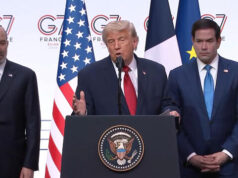
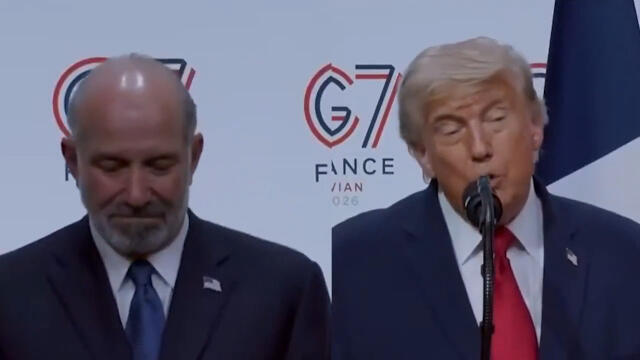
President Trump made some pointed remarks about Israel’s handling of Hezbollah during the G7 Summit, and Commerce Secretary Howard Lutnick’s visible reaction has people talking.
In the clip from the event, Trump pushed back on what he sees as disproportionate responses, saying he wasn’t questioning Israel’s right to protect itself but noting that when drones are fired into the desert and drop harmlessly, it doesn’t require knocking down buildings in Beirut. He added that Hezbollah “could behave better and frankly do a better job,” and that he didn’t think they were doing well, while expressing sympathy for Lebanon’s people.
Lutnick can be seen shaking his head during the comments, an expression that some are interpreting as disappointment or disagreement.
Video below:
Longer video:
This came amid broader discussions at the G7 on Middle East security following recent agreements involving Iran. Trump has consistently taken a results-oriented approach — supporting Israel’s security while calling for smarter, more effective strategies that avoid unnecessary escalation and long-term instability.
The moment highlights the kind of candid conversation Trump brings to these summits. While allies like Israel remain close partners, Trump isn’t shy about offering his unfiltered assessment when he believes adjustments could lead to better outcomes for everyone involved, including reducing suffering in places like Lebanon.
Whether Lutnick’s reaction signals internal discussion or simply a momentary expression, the clip has fueled online conversation about U.S. policy toward Israel and how the administration balances support with calls for strategic restraint.
Netanyahu and the Israeli government may not appreciate the public critique, but Trump’s style has always been to speak directly and prioritize practical results over diplomatic niceties. The full context shows a president focused on de-escalation where possible without compromising strength.
It’s another example of Trump owning the room and the conversation, even on sensitive international issues.
—